Our Product Categories
Tesofensine is a prototype experimental medicine belonging to the class of phenyltropanes being developed for the treatment of obesity. It inhibits the presynaptic reuptake of serotonin, norepinephrine, and dopamine by binding to transporter proteins and increasing the availability of these neurotransmitters in the brain.
Originally examined as a cure for degenerative diseases such as Parkinson’s and Alzheimer’s, its development progressed into being used to promote appetite suppression. Excellent results were obtained in clinical trials for significant weight loss, thus it represents a valuable candidate in the treatment of obesity. Its most important benefit is that of appetite suppression, increased satiety. https://peptide-works.com/tesofensine/.
Sequence (IUPAC Condensed): It is not classified as a peptide.
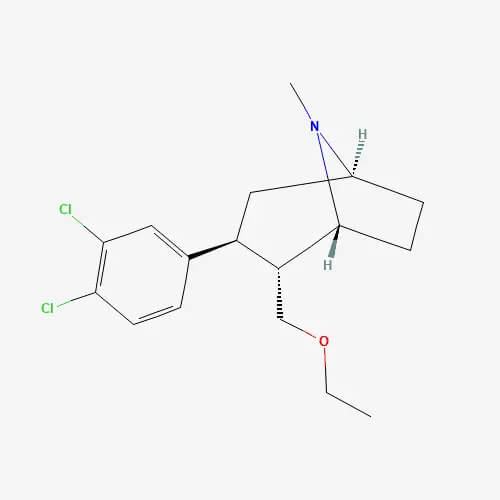
Molecular Formula: C17H23Cl2NO
Molecular Weight: 328.3 g/mol
View the Tesofensine Certificate Of Analysis (COA)
View the Tesofensine High Performance Liquid Chromatography (HPLC)
Tesofensine is a potent, presynaptic triple monoamine reuptake inhibitor. By inhibiting the transporters of serotonin (SERT), norepinephrine (NET) and dopamine (DAT), it elevates the extracellular levels of these active neurotransmitters in the synaptic cleft.
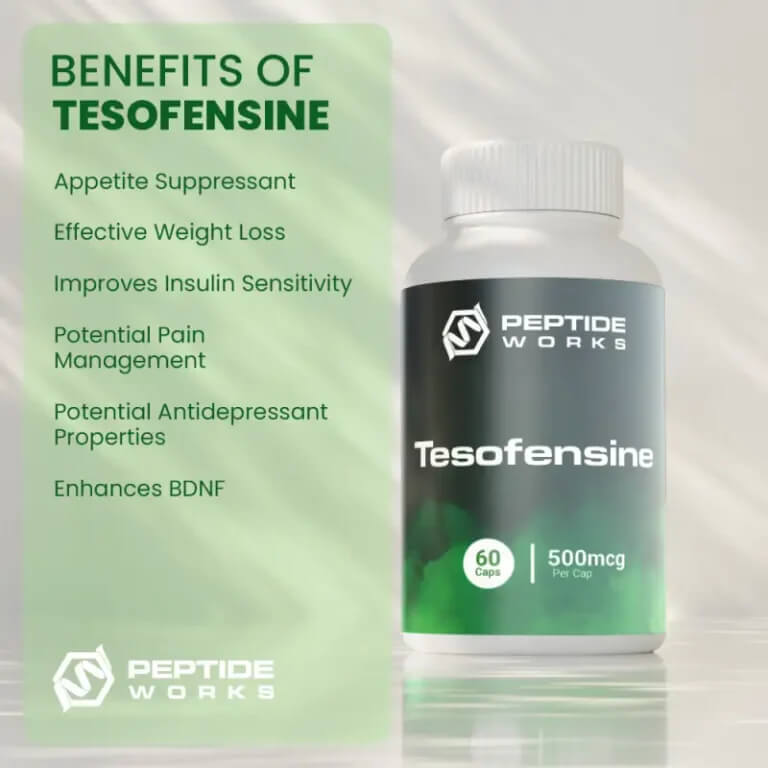
This concomitant rise in serotonin, norepinephrine and dopamine alters the neural circuits which regulate appetite and satiety, especially in the hypothalamus. Collectively, these effects substantially suppress hunger and promote fullness. This powerful appetite suppression is reduced calorie intake. It's one of the main reasons that studies have shown fasting people lose significant amounts of weight.
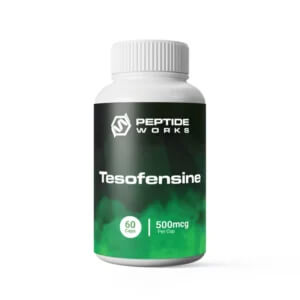
Purchase Tesofensine Capsules from Peptide Works. 60capsules per bottle, 500mcg(0.5mg) each capsule.
Obesity in obese patients: Data indicate Tesofensine, a potent triple monoamine reuptake inhibitor, produces dose-related weight loss for overweight or obese patients. In a 24-week phase, tesofensine combined with restricted caloric intake led to respective decreases in body weights of 4.5%, 9.2%, and 10.6% for doses of 0.25 mg, 0.5 mg, and 1.0 mg vs a decrease at 2% with placebo.
Preclinical studies have shown that tesofensine inhibits feeding behavior through GABAergic neurons of the lateral hypothalamus, ensuring sustained weight loss and absent rebound, providing a new hope for obesity.
Enhanced Body Composition and Metabolism: Studies indicate that Tesofensine enhances body composition as well as metabolism by inducing marked fat loss and increasing fat oxidation. In clinical trials it achieved up to 10.6% reduction of weight over 24 weeks, surpassing current weight-loss medication.
It incremented satiety,& decreased prospective food intake, and rose nighttime EE when adjusted for body composition. Moreover, tesofensine increased 24-h fat oxidation indicating a potential of this drug in improving metabolic profile and in sustainable obese management.
Appetite Inhibition and Energetics Tesofensine studies have demonstrated that it suppresses appetite and increases energy expenditure through actions on norepinephrine, serotonin, and dopamine systems. In DIO rats, tesofensine induced a marked reduction in food intake and body weight via activation of α1 adrenoceptor and dopamine (DA) D1 receptor.
It also prevented attenuated DA values in the nucleus accumbens and prefrontal cortex (PFC), both mitigating obesity-induced dopaminergic impoverishment. These effects emphasize the potential of tesofensine as potent anti-obesity medication.
Neurologicalt Tesofensine has also been researched for use in treatment of neurological conditions, including Parkinson's disease. In early PD, tesofensine resulted in an initial benefit of motor performance (UPDRS scores) at high doses that was not sustained. In advanced PD, modest motor improvements and a reduction of “off” time were noted, particularly with 0.25–0.5 mg doses. On the other hand, a complete dose-response relationship could not be drawn and more favorable results were obtained in favor of higher doses with more side effects.
The most commonsed questions about Tesofensine.
Which is it, Tesofensine Increases Metabolic Rate or Simply Suppresses Appetite?
'Tesofensine makes you less hungry and gives you that little bit of fullness'. Studies show it may slightly increase resting metabolic rate, but most of its effects are from reduced food intake. It works via brain pathways that control hunger and energy levels, so appetite suppression rather than direct metabolic stimulation is the driver.
Does Tesofensine Improve Brain Function?
Tesofensine stimulates chemicals in the brain that affect focus, mood and alertness. It inhibits the reuptake of the energy and motivation associated neurotransmitters dopamine, norepinephrine, serotonin. Studies show it may help with healthy brain signaling and neuron activity. On the other hand, the present studies with PYY show that it is still less clear that they also directly improve memory or cognition than that this may be a regulatory mechanism cornerstone to normal feeding behaviour and weight control.
What are the Side Effects of Tesofensine?
Studies suggest Tesofensine is capable of stimulant effects. Reactions have consisted of increased heart rate, elevated blood pressure, dry mouth, insomnia, nausea and mild agitation. Those effects are because it increases levels of brain chemicals that regulate mood and alertness. Research shows that side effects can vary by dosage, with more severe reactions occurring at higher dosages during testing.
Is it Legal to Purchase Tesofensine?
Tesofensine is not approved for use in the United States by the Food and Drug Administration (FDA). Research Cemical) and as such is not for human consumption,you can buy 2-FMA from [professional factory] in the USA?They sell it primarily for laboratory use or research purposes. Peptide laws and regulations can vary from country to country around the world, so it is always a good idea to research some guidance before you buy anything, anywhere.

The best weight loss peptides What are the top weight loss peptides?
This blog takes a deep dive into the science of weight loss peptides, and how they can assist with your weight loss journey. It specifically looks at Tesofensine, AOD-9604 and FTPP - how they work in the brain to control appetite; fat metabolism .

Does Tesofensine Work as an Adipostat?
Peptides and Weight Loss The following blog examines the science behind peptide selections Tesofensine, AOD-9604, FTPP and Tesamorelin to see how they assist with appetite and weight loss. It further emphasizes the hunger regulation by neurotransmitter binding of Tesofensine.

Tesamorelin: the fat burning, anti-aging peptide that spreads like wildfire.
This blog post will reveal the science behind Tesamorelin, a peptide designed to affect belly fat in particular through growth hormone pathways. It also contrasts Tesamorelin with Tesofensine, an additional fat-dissolving peptide.
ALL MATERIAL AND INFORMATION CONTAINED IN THIS SITE IS FOR EDUCATIONAL PURPOSES ONLY.
DISCLAIMER: These product are not designed for human consumption. This categorization limits them to research development and other lab applications. The content on our website: https://peptide- works.com/ serves for educational purpose. These items are not intended for human or animal use or consumption in any form. Use of these products should be restricted to appropriately prepared specialists. They are not a medicine or drug, and should not be misbranded as such.
Get In Touch
Payment Partner